
DfE target architecture
Understanding DfE user journeys
- Last reviewed
- 23 June 2026
- Owner
- Head of Architecture
DfE delivers services to a wide range of users across the education system. These interactions can be understood through 3 broad types of user journey.
Customer journeys, representing services used by:
- the education sector
- citizens
- parents, teachers and learners
These services are typically designed around policy outcomes or regulatory processes.
Partner journeys, representing system-to-system interactions with external organisations. These typically involve:
- integrations with school management information systems
- APIs used by sector systems -Ndata sharing with other government departments
Business journeys that support internal users and operational processes, including:
- DfE staff
- policy teams
- analysts
- operational and delivery teams
This model is sometimes referred to as the ‘fidget spinner’ view of DfE services.
It highlights that different types of interaction with DfE - customer, partner and internal business journeys - revolve around shared operational data and reusable capabilities.
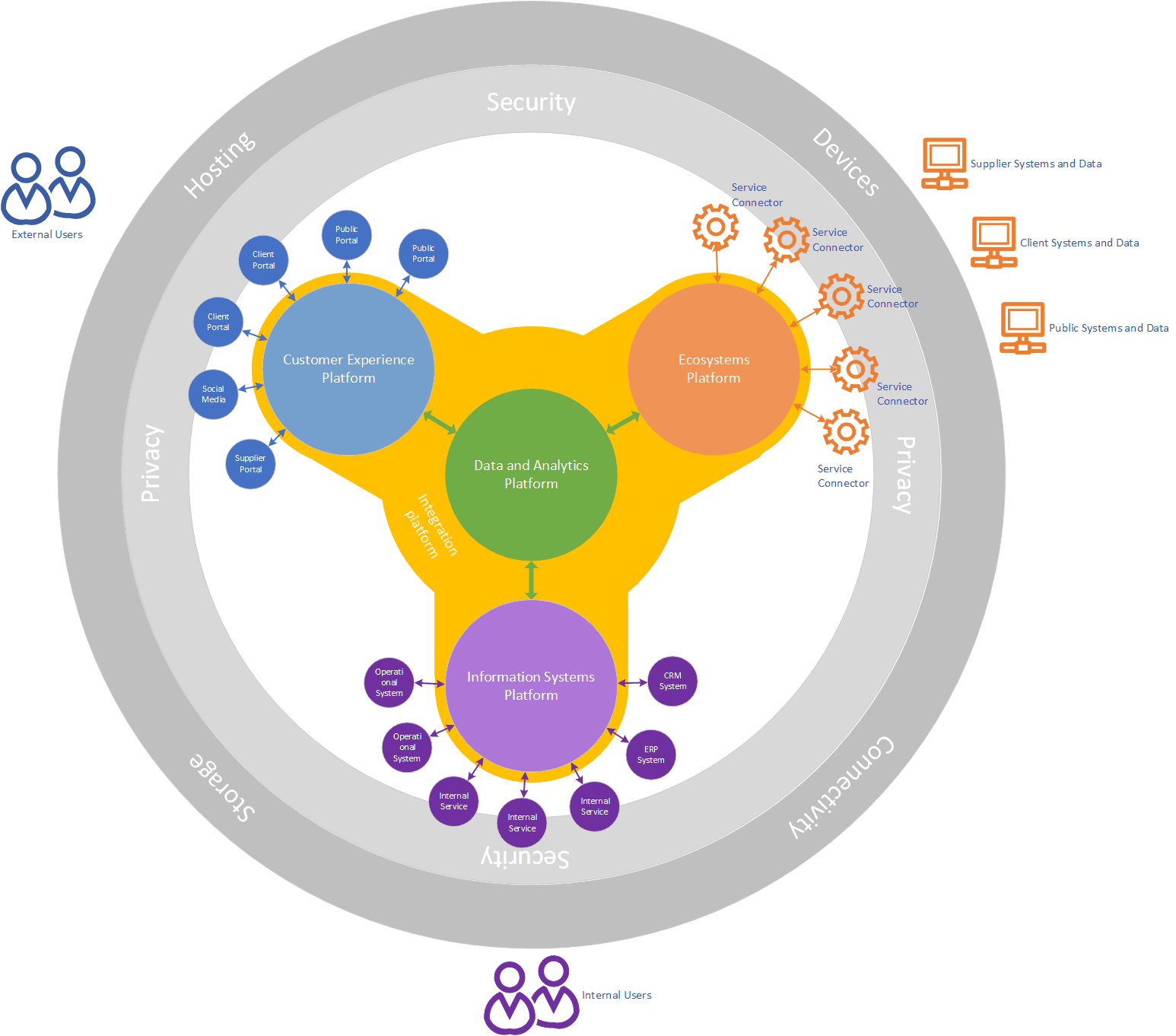
The target architecture helps structure these shared capabilities as reusable engines that support many services across the department.