
DfE target architecture
How services can use the target architecture
- Last reviewed
- 23 June 2026
- Owner
- Head of Architecture
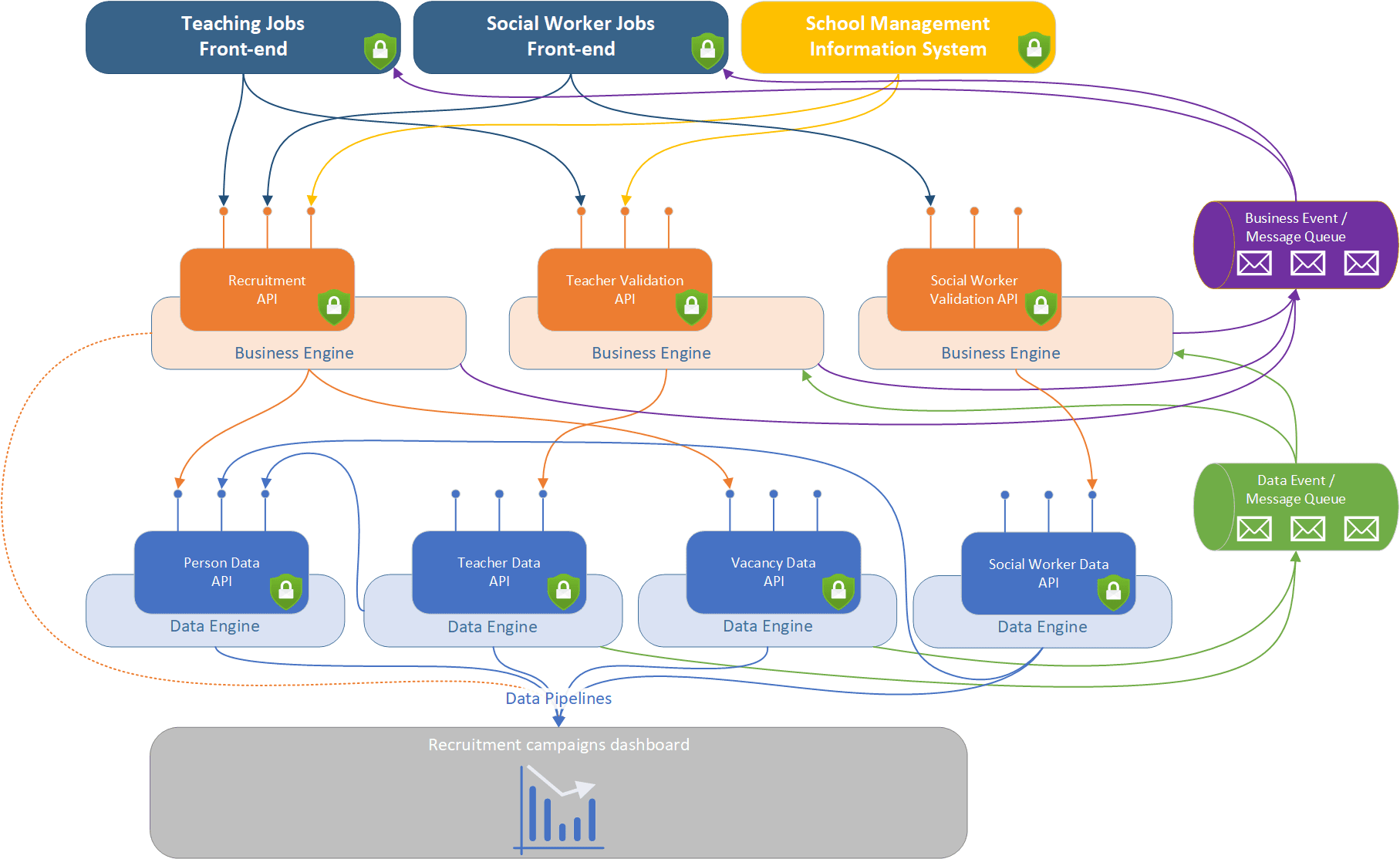
Most services built by DfE will combine capabilities from multiple engines. A typical service interaction might follow this pattern:
- A user interacts with a service through a front-end engine.
- The service invokes one or more business engines to apply policy rules or workflows.
- Business engines retrieve or update information through data engines.
- Supporting capabilities such as authentication, messaging or analytics are provided by enabling platforms.
This approach allows services to focus on delivering user outcomes while relying on shared capabilities, where appropriate.