
DfE target architecture
Core components of the target architecture
- Last reviewed
- 23 June 2026
- Owner
- Head of Architecture
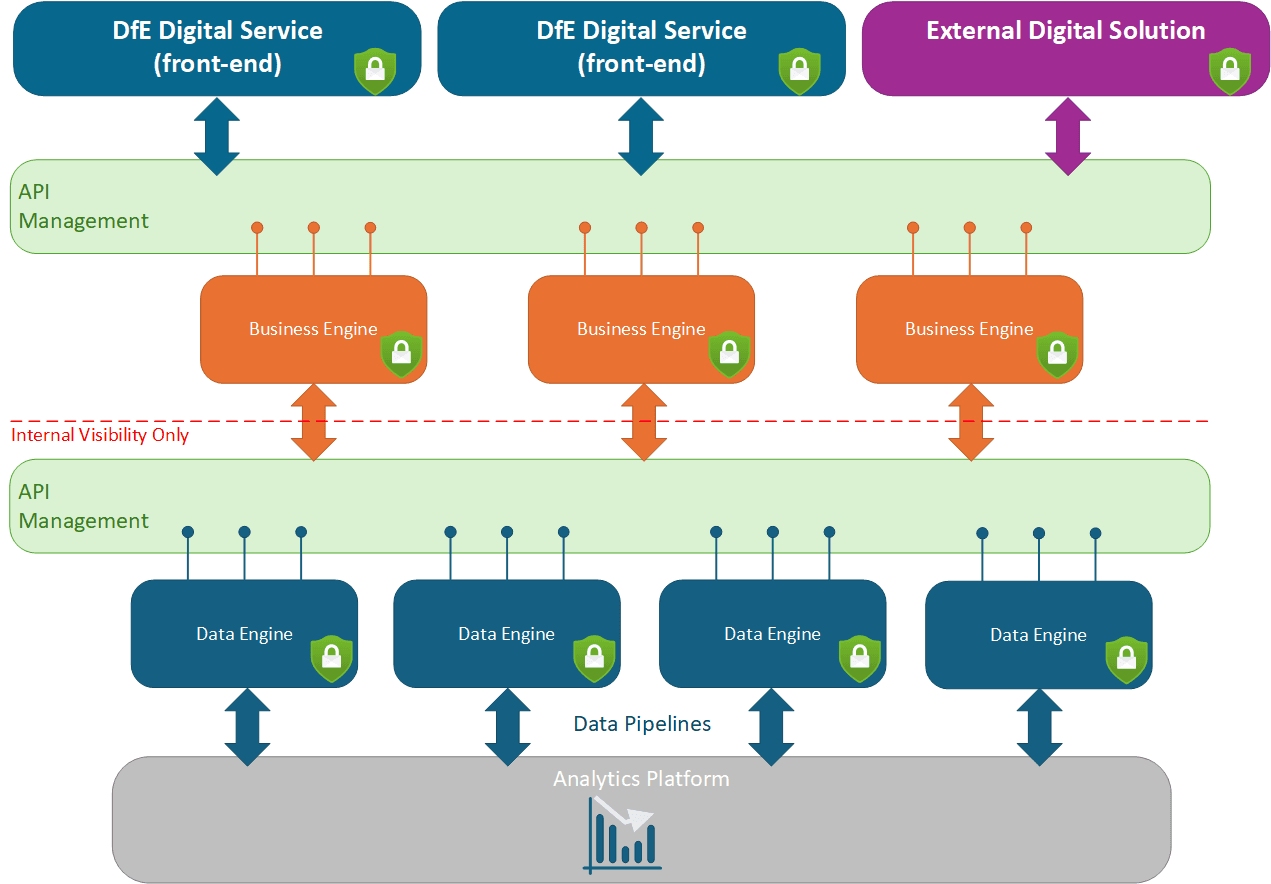
The target architecture organises capabilities into 3 types of engine, supported by shared, enabling platforms.
Front-end engines
Front-end engines provide shared capability for delivering digital services to users.
They support consistent user experiences across services by providing common components and integration patterns.
They may include:
- identity and authentication integration
- consistent navigation and design patterns
- personalised service access
- orchestration of underlying services
Business engines
Business engines implement reusable business capabilities such as:
- eligibility and validation rules
- programme or funding calculations
- application workflows
- regulatory checks
They expose functionality through APIs so multiple services can reuse the same implementation of policy logic.
Data engines
Data engines provide shared access to authoritative operational data.
Example data engines could include:
- establishments (schools and providers)
- people (learners or staff)
- organisations
- programmes or funding
Data engines provide:
- consistent access to operational data
- enforced data quality
- APIs for creating, querying and updating information
- reliable and scalable access to shared data
Enabling platforms
Enabling platforms provide common infrastructure and technical services that support the engines and the services that use them.
Examples include:
- identity and authentication services
- API gateways
- integration platforms
- event and messaging infrastructure
- analytics platforms
- hosting and infrastructure services